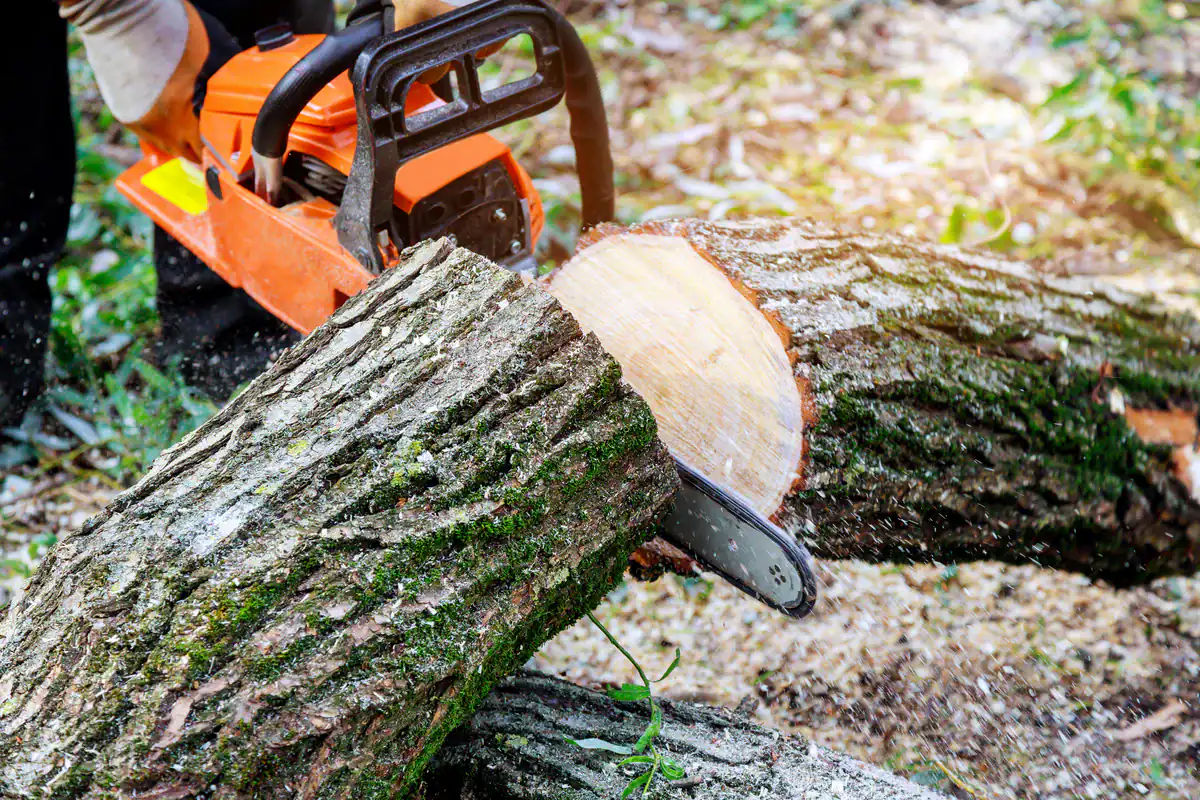
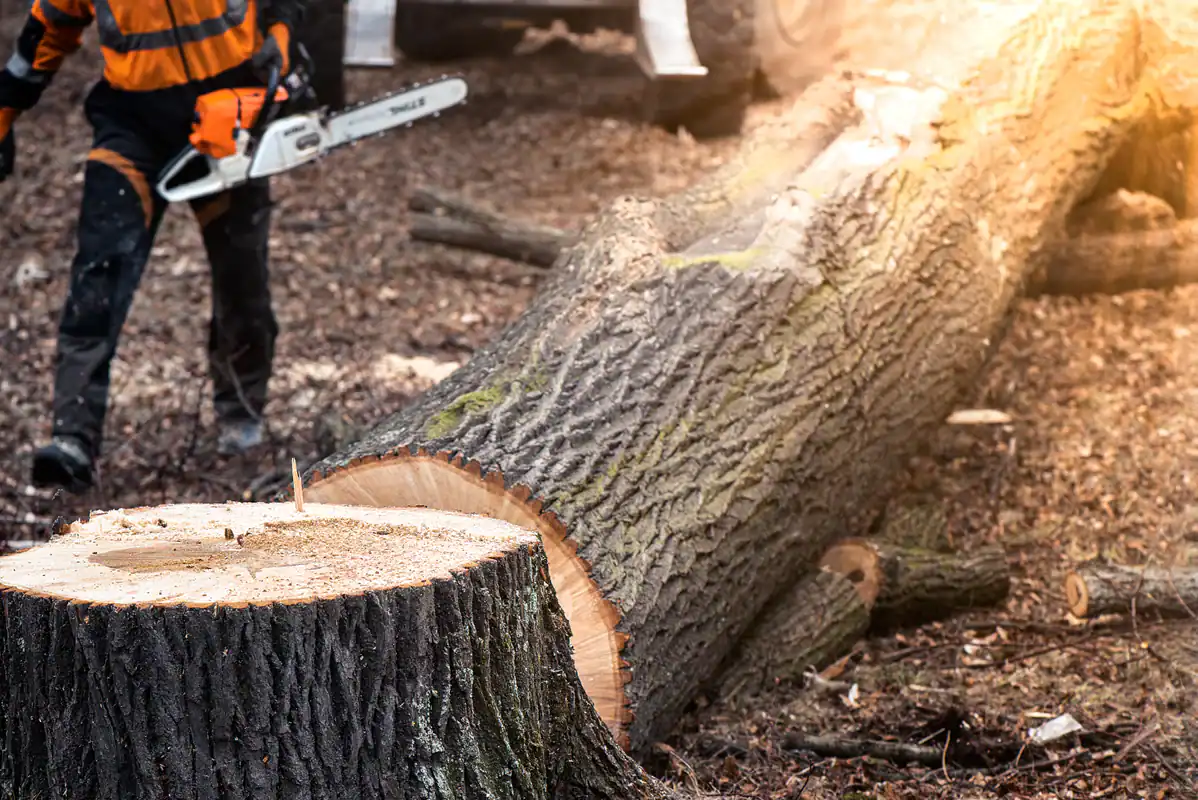
Gladstone’s established neighborhoods — Brooktree, Carriage Hills, Oak Park — were built out in the 1950s and 60s. The trees planted back then are now 50 to 70 years old. For a lot of homeowners here, that’s not a problem waiting to happen. It’s already happening: dead limbs over the driveway, a trunk that leans a little more every spring, roots pushing up against the foundation.
Once the tree is gone, the anxiety goes with it. No more watching the sky every time a storm rolls through Clay County. No more wondering if that limb is going to come down on the neighbor’s fence or your car.
What most people don’t realize is that Gladstone’s city code treats dead trees as a nuisance violation — one the city will abate and bill you for if you don’t handle it first. Getting ahead of it means doing it on your schedule, with a crew you chose, at a fair price — not waiting for a notice in the mail and a bill you didn’t budget for.
The other thing that changes is the cleanup. We handle full cleanup on every job — no piles left behind, no sawdust on the driveway. If you want to keep the wood or mulch, just say so before we start. Otherwise, it’s gone when we leave.
We’ve been working in the Kansas City, KS & MO metro for over a decade, which means we know the clay soil that makes root systems unpredictable in Gladstone and the surrounding area. We understand the storm patterns that come through Clay County every spring and the tight residential lots that define neighborhoods like Carriage Hills and The Woodlands — where the tree you need gone is always three feet from something you care about.
We’re a family-owned crew, not a franchise. We live and work in this part of the metro, and we treat every property accordingly. We’re fully insured — liability and workers’ comp both — which matters more than most people think until something goes wrong on someone else’s job.
We’ve also deployed for storm recovery events across Kansas, Missouri, and several other states. When a severe thunderstorm tears through the Northland and you’ve got a tree on your roof, we already know how to move fast in those conditions.
It starts with a free on-site estimate. We come out, look at the tree, and give you a straight answer about what it actually needs. If a strategic trim can solve the problem, we’ll tell you that. If the tree needs to come down, we’ll explain why and walk you through what the job involves. No pressure, no upsell.
Once you’re ready to move forward, scheduling is fast. Multiple customers have had an estimate within 24 hours and the work done the following day. In Gladstone, where every removal happens in a dense residential setting — near structures, fences, driveways, and utility lines along corridors like North Oak Trafficway and N Prospect Avenue — that kind of response time matters. A hazardous tree doesn’t get safer while you wait two weeks for an opening.
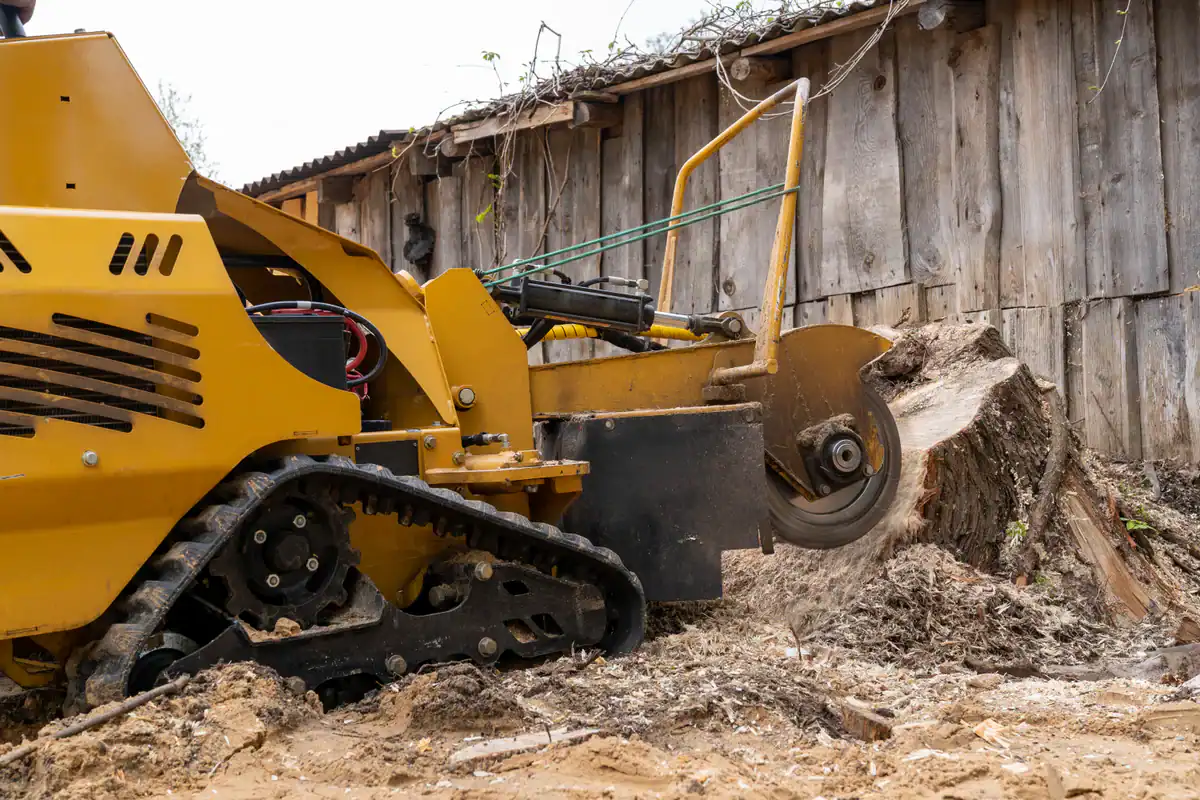
On the day of the job, we handle everything from the cut to the cleanup. Large limbs are brought down in sections when needed — especially important in the tighter lots common to Gladstone’s postwar neighborhoods, where there’s no open field to drop a full tree into. Stump grinding can be added if you want the area cleared completely. When we leave, the yard is clean.
One thing worth knowing: Gladstone has a formal tree ordinance on file with the city. If your removal involves a tree near a property line or a public right-of-way, it’s worth confirming with the city whether any notification is required before work begins. We can walk you through what typically applies.
Ready to get started?
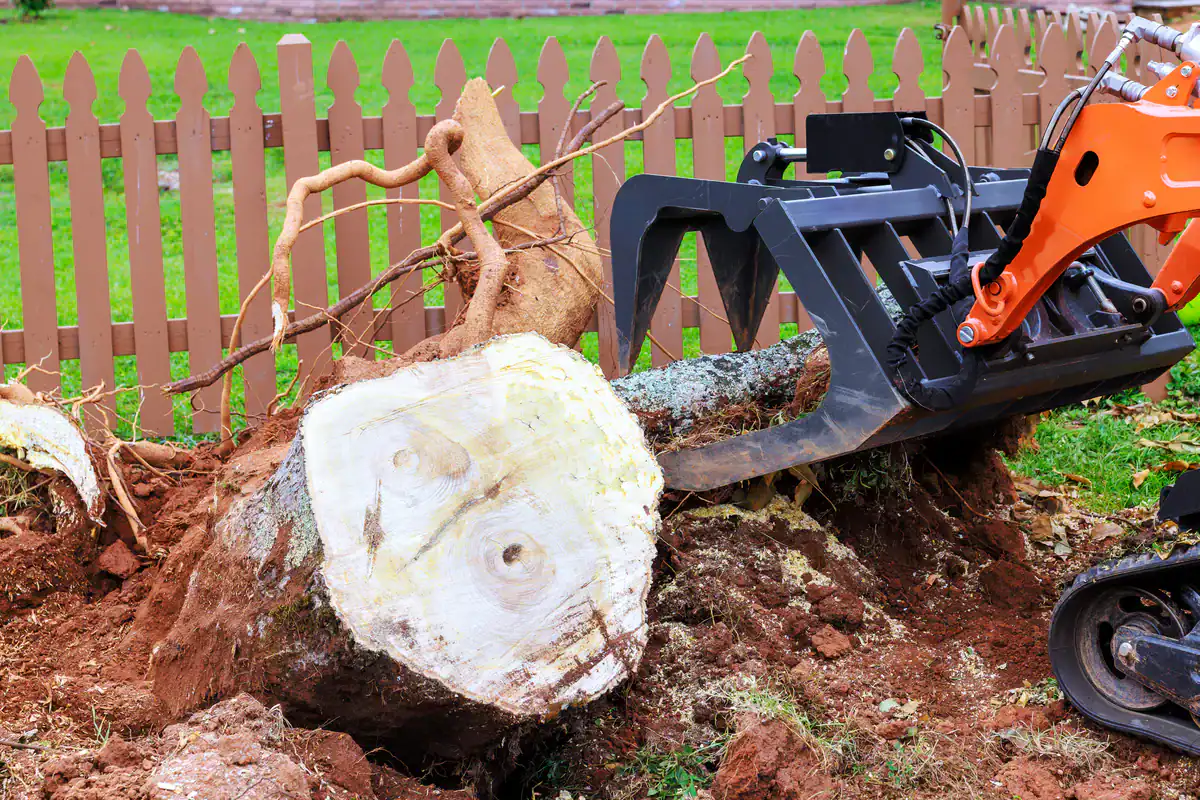
Tree removal in Gladstone covers more ground than just cutting something down. Our service includes the full removal — from the initial cut through trunk and limb hauling — plus complete cleanup of the work area. Stump grinding is available if you want the stump taken below grade so the area can be replanted or leveled out. If you have storm-damaged limbs that need to come down without a full removal, we handle that too.
Gladstone’s older tree stock means jobs here often involve large, mature specimens — silver maples, oaks, cottonwoods, and ash trees that have been growing since the neighborhood was built. Ash trees in particular are worth paying attention to: Clay County is in the confirmed range of Emerald Ash Borer, and a lot of the ash trees in Gladstone’s established neighborhoods are in various stages of decline. Dead ash trees lose structural integrity fast and can drop large sections without warning, even on calm days.
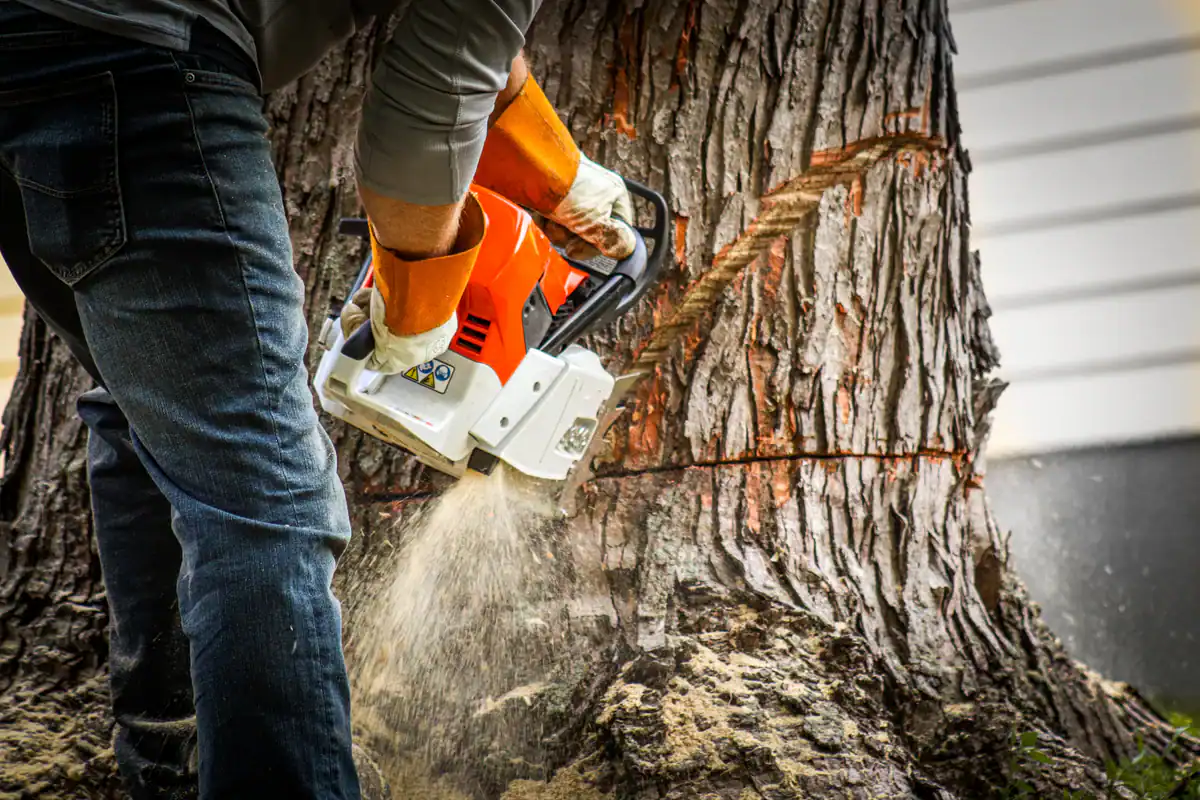
For properties in neighborhoods like Brooktree or Oak Park Subdivision — where mature trees sit close to homes, garages, and shared fences — we work in sections, controlling the direction of each cut to avoid damage to adjacent structures. We carry full liability insurance and workers’ compensation coverage on every job, which means you’re protected if anything unexpected happens to your property or to a crew member while we’re on your land. That’s not standard across every company working in this area, and it’s the first thing you should verify before anyone picks up a chainsaw on your property.
Gladstone has a formal tree ordinance on file with the city, which means tree management is regulated at the municipal level. For most standard residential removals on private property in Gladstone, a permit isn’t typically required — but the specifics can depend on factors like whether the tree is near a public right-of-way, a utility easement, or a shared property line.
Before any work begins, it’s worth a quick call to the City of Gladstone’s Community Development department to confirm whether your specific situation requires any notification or approval. This is especially relevant for trees along North Oak Trafficway or N Prospect Avenue corridors, where city infrastructure projects are active. We can help you understand what questions to ask, but the city is the authoritative source on what’s required for your address.
Gladstone’s city code explicitly lists dead trees as a nuisance violation. If the city determines a dead tree on your property is a hazard or nuisance, they have the authority to abate it — meaning they’ll remove it themselves and bill you for the cost. That city-administered removal will almost certainly cost more than hiring us on your own terms, and you won’t have any say in the timing or the crew doing the work.
Beyond the city ordinance, there’s a homeowners insurance angle worth knowing. If a dead or visibly diseased tree falls and damages your home, your neighbor’s fence, or a vehicle, your insurance company may deny the claim on the grounds of negligence — the argument being that you knew the tree was a risk and didn’t address it. Proactive removal is the financially responsible move, not just the convenient one.
This is one of the most common questions, and the honest answer is: it depends on what’s actually going on with the tree. A tree that has lost less than about 25% of its branch structure can often recover with proper pruning. But if the trunk is hollow, the root system is compromised, or the tree is structurally leaning toward a structure, trimming isn’t going to solve the underlying problem — it just delays the inevitable.
In Gladstone’s older neighborhoods, a lot of the trees that look borderline are actually further along in decline than they appear from the yard. Ash trees affected by Emerald Ash Borer, for example, can look partially alive while being structurally unsound. A silver maple with a split trunk near a roofline is a different situation than one in an open yard. The only way to know for certain is an on-site assessment. We’ll give you a straight answer about what the tree actually needs — not the answer that generates the biggest invoice.
Yes, and this is actually the normal working condition for most tree removals in Gladstone. Because the city is entirely surrounded by Kansas City, KS & MO with no rural buffer, every job here is in a dense residential setting. There’s no open field to drop a full tree into — we work in sections, controlling each cut to bring the tree down in a way that avoids the fence, the garage, the driveway, and whatever else is nearby.
This is exactly the kind of work we’ve been doing in the Kansas City, KS & MO metro for over a decade. Customer reviews specifically describe large tree removals in tight neighborhood lots — including trees near neighboring properties — completed without damage to adjacent structures. The key is experience and proper insurance. Before any crew starts work near a shared property line, confirm they carry both general liability and workers’ compensation coverage. If something does go wrong, you want to know there’s a policy that covers it — not a company that disappears after the job.
Tree removal can happen any time of year, but there are a few seasonal factors worth knowing for the Gladstone area specifically. Late winter and early spring — before new growth begins — is generally the best window for pruning and for removing trees that are in decline but not yet an emergency. The structure of the tree is easier to assess when the canopy is bare, and the ground is firm enough for equipment without the summer heat adding stress to the job.
That said, storm season in Clay County runs roughly March through June, and ice storms are a documented winter hazard in Missouri. If a storm event creates an urgent situation — a limb on the roof, a tree blocking a driveway — timing isn’t a choice. We respond quickly to post-storm situations and have experience handling emergency removals in exactly these conditions. Fall is also a high-inquiry season in Gladstone because leaf drop reveals structural problems in trees that were hidden all summer — dead branches, split trunks, and significant lean become visible once the canopy clears.
The most important thing to verify before hiring anyone is insurance — specifically, both general liability and workers’ compensation coverage. In Missouri, there’s no required state licensing for basic tree work, which means anyone with a truck and a chainsaw can legally call themselves a tree service. The credential that actually protects you is insurance. If an uninsured worker is injured on your property, you could be personally liable for their medical costs.
Ask for a certificate of insurance before agreeing to anything. Beyond insurance, look at how the company communicates. Did they show up for the estimate on time? Did they explain what the job involves and give you a clear price? Did they answer your questions directly? A company that’s vague about pricing or pushes you toward a decision before you’re ready is a company worth walking away from. Gladstone homeowners in established neighborhoods like Carriage Hills or Brooktree have plenty of options — the right crew will give you a fair price, a clear scope of work, and a yard that’s clean when we leave. That’s the baseline, not a bonus.
Other Services we provide in Gladstone