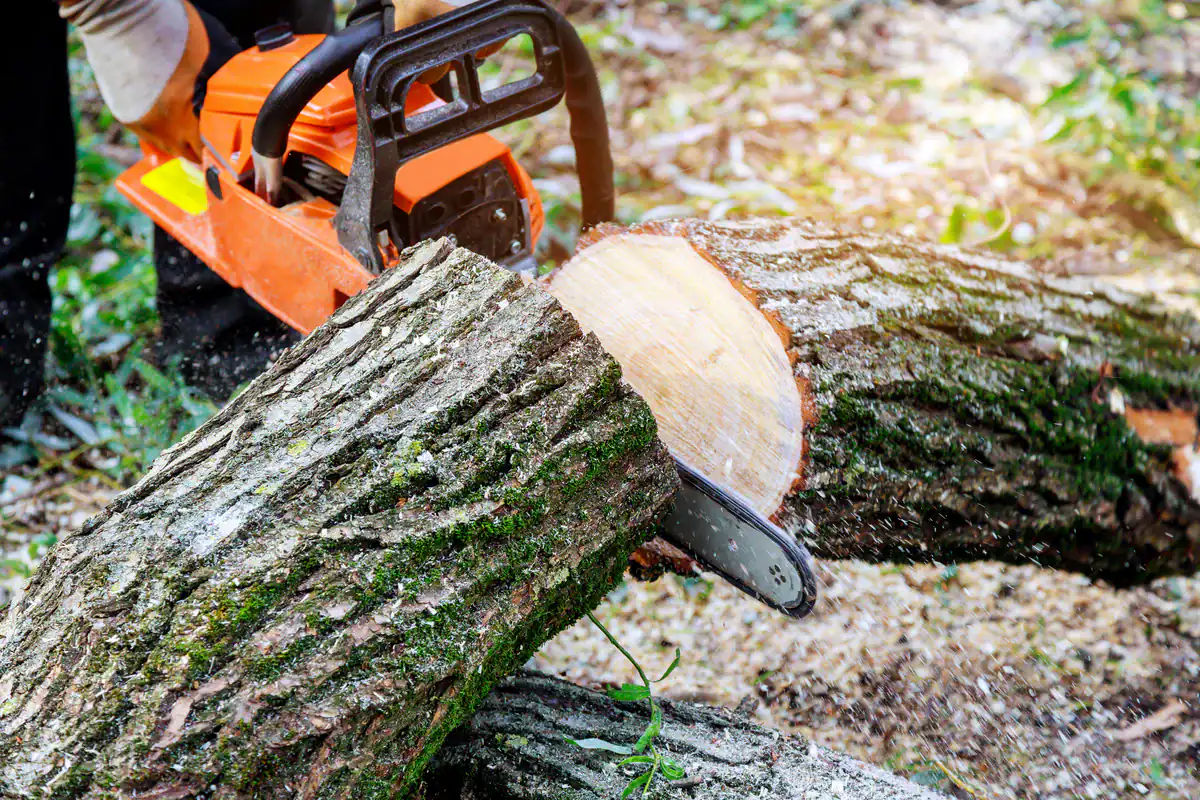
A tree that’s dead, diseased, or structurally compromised doesn’t give you much warning. One bad storm — and Eudora sees more than 40 severe weather days a year, with winds recorded above 90 mph in recent events — and that tree becomes your problem in a hurry. Getting it removed before that happens means you’re not scrambling after the fact, dealing with roof damage, a crushed fence, or a neighbor’s car.
What most Eudora homeowners don’t realize is that the city’s own municipal code classifies dead trees or hazardous limbs on private property as a public nuisance if they’re close enough to fall on a sidewalk, alley, or power line. That’s not just a safety concern — it’s a code violation the city can formally notice you on. Handling it proactively puts you ahead of that entirely.
For homeowners in the older neighborhoods near Main Street, where trees have been growing on quarter-acre lots for 70 to 150 years, or near the Wakarusa River where cottonwoods and silver maples tend to develop shallow root systems and brittle wood over time, the risk isn’t abstract. It’s sitting in your yard right now. Once the tree is gone, the cleanup is done, and the job is finished — you get your yard back, your peace of mind back, and one less thing to worry about every time the sky turns green.
We’re a family-owned, fully insured tree service based in Kansas — and we’ve been doing this work across the KC metro corridor for over ten years. That includes Eudora and the communities along K-10, the same highway that connects you to De Soto, Lenexa, and Olathe. We see the same storm patterns, the same soil conditions, the same tree species. This isn’t a franchise dispatching strangers to your address.
We’ve handled storm recovery work across Kansas, Missouri, and several other states — which means when Eudora gets hit, the crew responding to your call has seen far worse and knows exactly what to do. Every job comes with full cleanup included. No wood piles left behind, no debris scattered across your lawn. If you want to keep the wood or mulch, just say so upfront.
You get a free, honest estimate — and if a trim can solve your problem instead of a full removal, that’s what we’ll tell you. No upsell, no pressure.
It starts with a free on-site estimate. We come out, look at the tree, assess the situation honestly, and tell you what it actually needs. If removal is the right call, we explain why. If it isn’t, we’ll tell you that too. For newer homeowners in subdivisions like Shadow Ridge or Deer Valley who inherited trees they didn’t plant and aren’t sure what they’re dealing with, this assessment alone is worth the call.
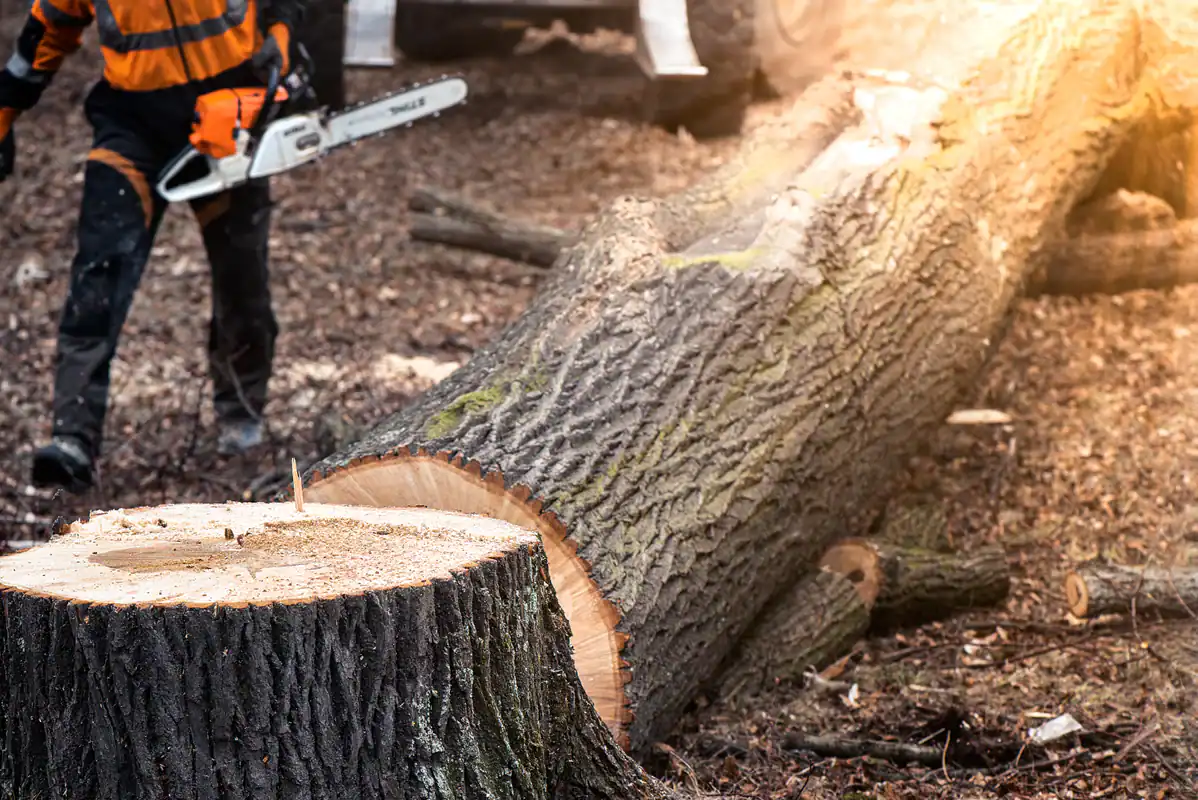
Once you’re ready to move forward, we handle everything — cutting, sectioning, and removing the tree from the ground up. For large trees near structures, fences, or neighboring properties, the work is done in sections from the top down, carefully controlling where each piece falls. Eudora’s older residential blocks near downtown have tight lots and mature canopies that extend over property lines, and that kind of close-quarters removal requires a crew that’s done it before without incident.
After the tree is down, full cleanup is part of the job. The debris gets hauled away, the area gets cleared, and your property looks like the tree was never there. If you’d like to keep the wood for firewood or the chips for mulch, just mention it before the job starts. The whole process — from estimate to finished yard — typically moves quickly, often within a day or two of your initial call.
Ready to get started?
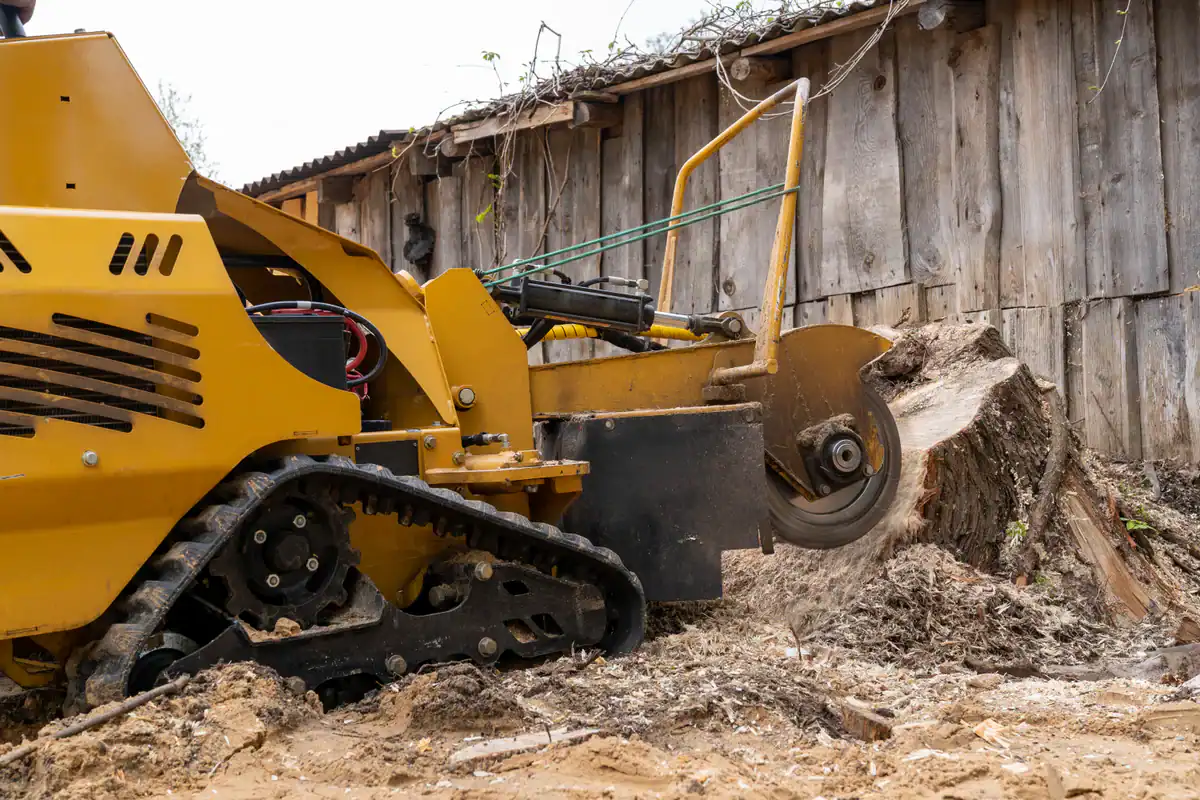
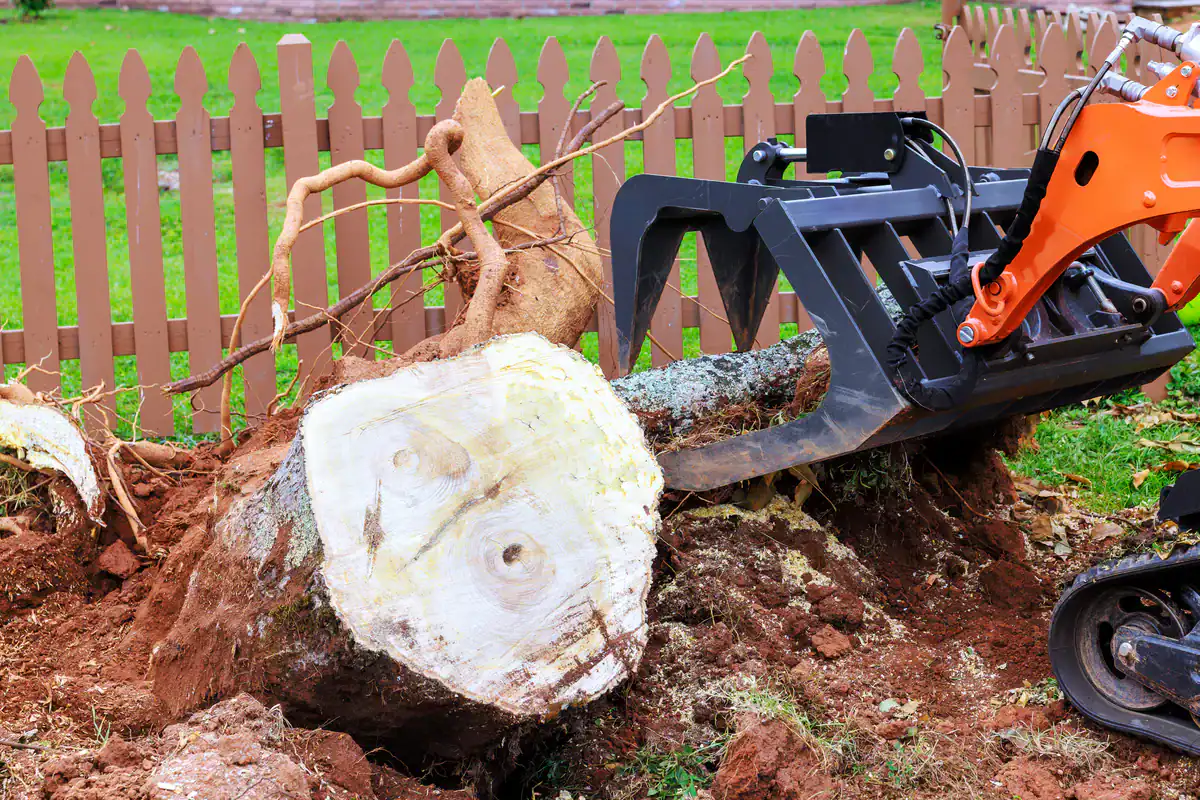
Tree removal through our service covers the full scope of the job — not just cutting the tree down. That means the trunk, the limbs, the brush, and all the debris that comes with a tree that size. Stump grinding is available if you want the stump removed as well, which is worth considering if you’re planning to reseed, replant, or just want a clean finished look in the yard.
For Eudora properties specifically, a few things are worth knowing going in. If your tree is near a sidewalk, alley, or overhead power line and it’s dead or visibly hazardous, Eudora’s city code already classifies it as a public nuisance. That means the city has the authority to issue a formal notice requiring you to address it — and the clock starts ticking from there. Getting ahead of that with a removal is the cleaner move, both financially and practically.
Diseased tree removal follows the same process, but the assessment matters more upfront. Emerald Ash Borer has been active throughout Douglas County for years, and it kills ash trees quietly — by the time the canopy looks visibly bad, the structural integrity is often already compromised. The same applies to Oak Wilt, which is a concern for the significant oak population in the Lawrence and Eudora area. If you’re not sure whether your tree is dead, dying, or just stressed, the free estimate is the right first step.
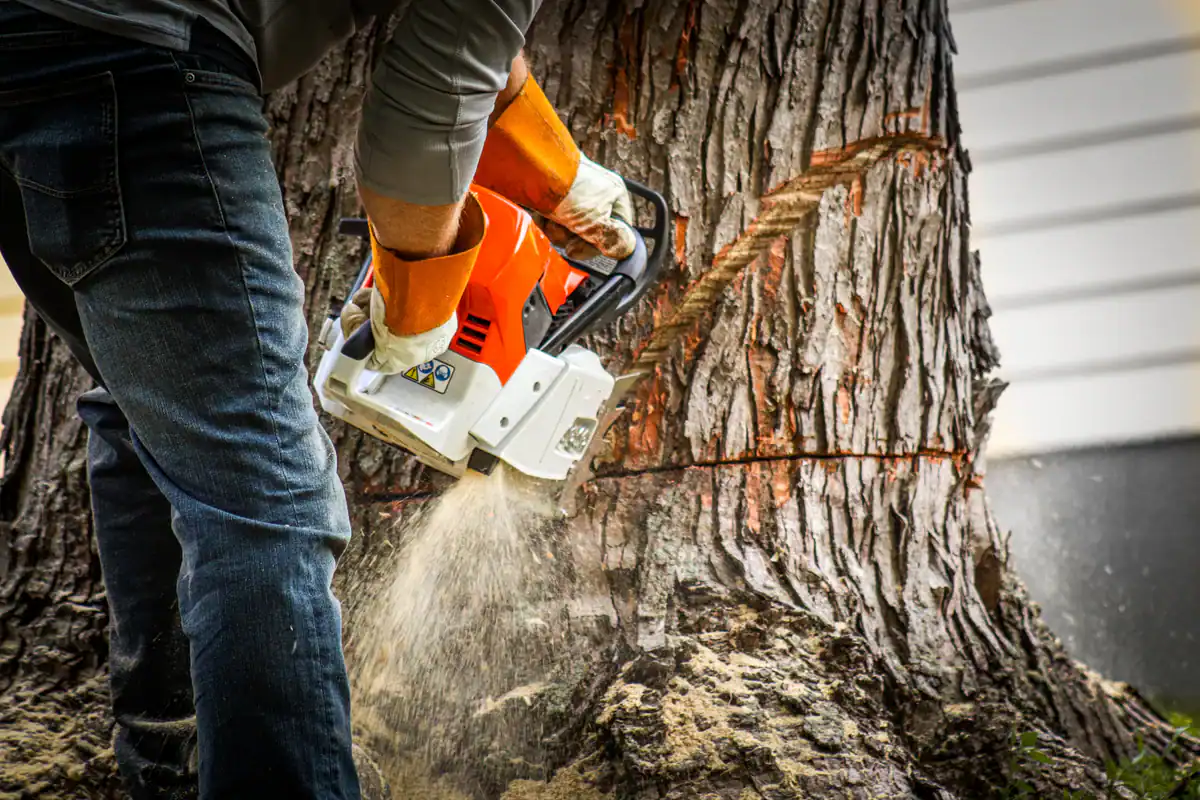
Based on Eudora’s city code, there is no permit requirement for removing a tree on private property the way some larger Johnson County municipalities require — you don’t need to file paperwork or get city approval before having a tree taken down on your own lot. That simplifies things considerably compared to cities like Olathe or Lenexa, where permit requirements can add time and cost to the process.
What Eudora’s code does address is the other side of the equation: leaving a hazardous or dead tree in place. Under the city’s municipal ordinances, dead trees or limbs on private property that are close enough to fall on a sidewalk, alley, or power line are classified as public nuisances. The city can issue a formal notice requiring you to address the situation, and if it’s serious enough, the timeline for compliance can be very short. So while you don’t need permission to remove a tree, you may not have the luxury of waiting indefinitely if the tree is in a problem location.
This is one of the most common questions, and the honest answer is: it depends on what’s actually going on with the tree, and you usually can’t tell from the ground without a closer look. A tree that looks rough from the outside — sparse canopy, a few dead branches, some bark damage — might be salvageable with a good structural trim. On the other hand, a tree that looks mostly fine from the street can have internal decay, root damage, or a compromised trunk that makes it a genuine hazard.
A few signs that lean toward removal: the trunk is hollow or has significant decay, more than half the canopy is dead, the tree has a severe lean that developed suddenly, or it’s a species like cottonwood or silver maple near the Wakarusa River where shallow root systems and brittle wood make structural failure more likely as the tree ages. For ash trees anywhere in Douglas County, Emerald Ash Borer damage is often further along than it looks — if the canopy is thinning and you’re seeing woodpecker activity or S-shaped galleries under the bark, removal is typically the call.
The free on-site estimate is designed exactly for this situation. You get a straight answer on what the tree actually needs, not a default recommendation for the most expensive option.
It depends on the circumstances, and the details matter more than most people realize. If a healthy tree falls during a storm and damages a structure on your property — your roof, your fence, your garage — most standard homeowners insurance policies will cover the cost of removing the tree from the structure and repairing the damage, typically up to a certain limit for the removal itself, often in the $500 to $1,000 range depending on your policy.
Where it gets complicated is when the tree was already dead, visibly diseased, or in a condition that a reasonable person would have recognized as hazardous. In those cases, insurance companies can — and often do — deny claims on the basis of negligence. The argument is that you knew the tree was a problem and didn’t address it. That denial can leave you paying for both the removal and the damage out of pocket. Given that Eudora sees documented winds above 90 mph in severe weather events, a dead tree near your home isn’t a hypothetical risk — it’s a when, not an if. Proactive removal is almost always the more financially sound decision.
For most residential jobs, the removal itself is completed in a single day. A smaller or medium-sized tree — say, something in the 30-foot range — typically takes a few hours from setup to cleanup. Larger trees, particularly the kind of mature hardwoods you find in Eudora’s older neighborhoods near Main Street where trees have been growing for decades, can take a full day depending on the complexity of the situation.
Factors that affect the timeline include the size of the tree, how close it is to structures or utility lines, the condition of the wood (dead or diseased trees can be more unpredictable to work with than healthy ones), and whether stump grinding is part of the job. Properties near the Kansas or Wakarusa rivers can also have softer or more variable ground conditions that affect how equipment is positioned and how the work proceeds. The estimate visit gives the crew a chance to assess all of that upfront so there are no surprises on the day of the job. Response times are fast — estimates are typically scheduled within 24 hours, and work is often completed the following day or within a couple of days of the estimate.
Full cleanup is included on every job — that’s not an add-on or an upgrade, it’s just part of how we work. Once the tree is down and sectioned, the crew hauls away the debris: branches, brush, trunk sections, and whatever else came down with it. You’re not left with a pile of wood in your yard waiting for a second trip.
If you want to keep the wood — for firewood, for a fire pit, or for any other reason — just say so before the job starts. Same with wood chips if the material is being chipped on-site. It’s easy to set aside, but it needs to be communicated upfront so the crew plans accordingly. Eudora’s city code does permit the burning of tree limbs, brush, and clippings on private property, so if you’re keeping some of the material and plan to burn it, that’s an option available to you locally. Stump grinding is a separate service that can be added to the job if you want the stump fully removed rather than left at ground level — worth considering if you’re planning to replant, reseed the area, or just want the yard to look finished.
The most important thing to verify before hiring anyone is insurance — specifically liability insurance and workers’ compensation. This isn’t a formality. If a crew member is injured on your property and the company doesn’t carry workers’ comp, you can be held personally liable for those costs. In Kansas, there’s no state licensing requirement for basic tree work, which means anyone with a truck and a chainsaw can legally call themselves a tree service. Insurance is what separates a legitimate operation from someone who disappears when something goes wrong.
Beyond insurance, look for a company with verifiable local reviews that include specific details — job types, outcomes, how the crew handled tight spaces or cleanup. Generic five-star ratings without substance don’t tell you much. Ask whether cleanup is included, whether they’ll give you a written estimate, and whether they’ll tell you honestly if the tree doesn’t need full removal. A company that’s willing to say “you might just need a trim” is one that’s playing a longer game than a single invoice. We’ve been serving the KC metro corridor — including Eudora and communities along K-10 — for over ten years, carry full insurance, and offer free estimates with no obligation. That’s a reasonable starting point for any Eudora homeowner doing their homework.
Other Services we provide in Eudora