Most homes in Buckner were built around 1972. The trees planted back then — silver maples, ash trees, oaks, cottonwoods — are now 50 years old or more. Some of them are healthy. Some of them aren’t. And the ones that aren’t don’t just look bad — they’re a real hazard sitting on your property, waiting on the right wind or the right storm.
The Missouri River valley doesn’t exactly go easy on trees. Buckner sits right in that corridor, and if you were anywhere near town on June 3, 2025, you already know what that looks like. That storm system dropped large tree limbs across Highway 7 and took out power lines just a few miles from town. A tornado was confirmed moving eastward toward Buckner. That’s not a once-in-a-decade event — that’s the reality of living in the valley.
When you get a hazardous tree removed before something happens, you’re not just clearing your yard. You’re removing a liability. A dead or visibly diseased tree that falls and causes damage may not be covered by your homeowners insurance if the insurer determines you knew it was a problem and didn’t act. Getting it handled now is the financially responsible move — and the one that lets you stop thinking about it every time the sky turns dark.
We’ve been working in the Kansas City, KS & MO metro for over a decade. Our crew is small, tight-knit, and rooted in this area — not a franchise, not a call center dispatching strangers. When we show up to your property in Buckner or northeastern Jackson County, we’re not learning on the job.
We’ve handled large tree removal in tight residential neighborhoods, storm response across multiple states, and everything in between. Customers in Buckner consistently describe the experience the same way: we showed up when we said we would, the price was fair, and the yard was clean when we left. No piles, no debris, no follow-up calls needed.
Buckner is a community where people notice when something’s done right — or when it isn’t. That’s exactly the kind of town we’ve built our reputation in. Honest assessments, no upselling, and a crew that treats your property like we’d want someone treating ours.
It starts with a free on-site estimate. We come out, look at the tree, and give you a straight answer about what it needs. If a strategic trim can solve the problem, we’ll tell you that. If the tree needs to come down, we’ll explain why and give you a fair price — no runaround, no pressure to sign on the spot.
Once you’re ready to move forward, scheduling is fast. Multiple Buckner-area customers have confirmed same-day estimates and work completed the following day. That kind of turnaround matters when you’re dealing with a storm-damaged limb hanging over your house or a dead ash tree that’s been dropping branches onto your driveway.
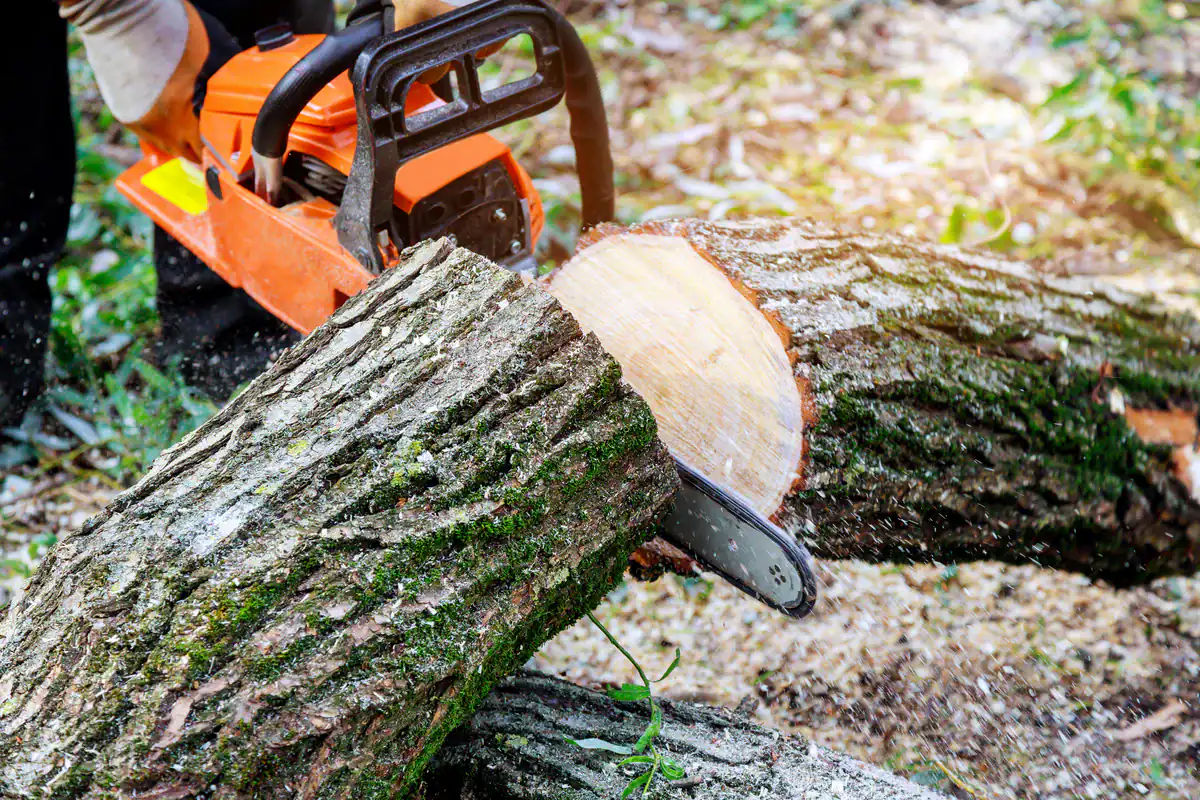
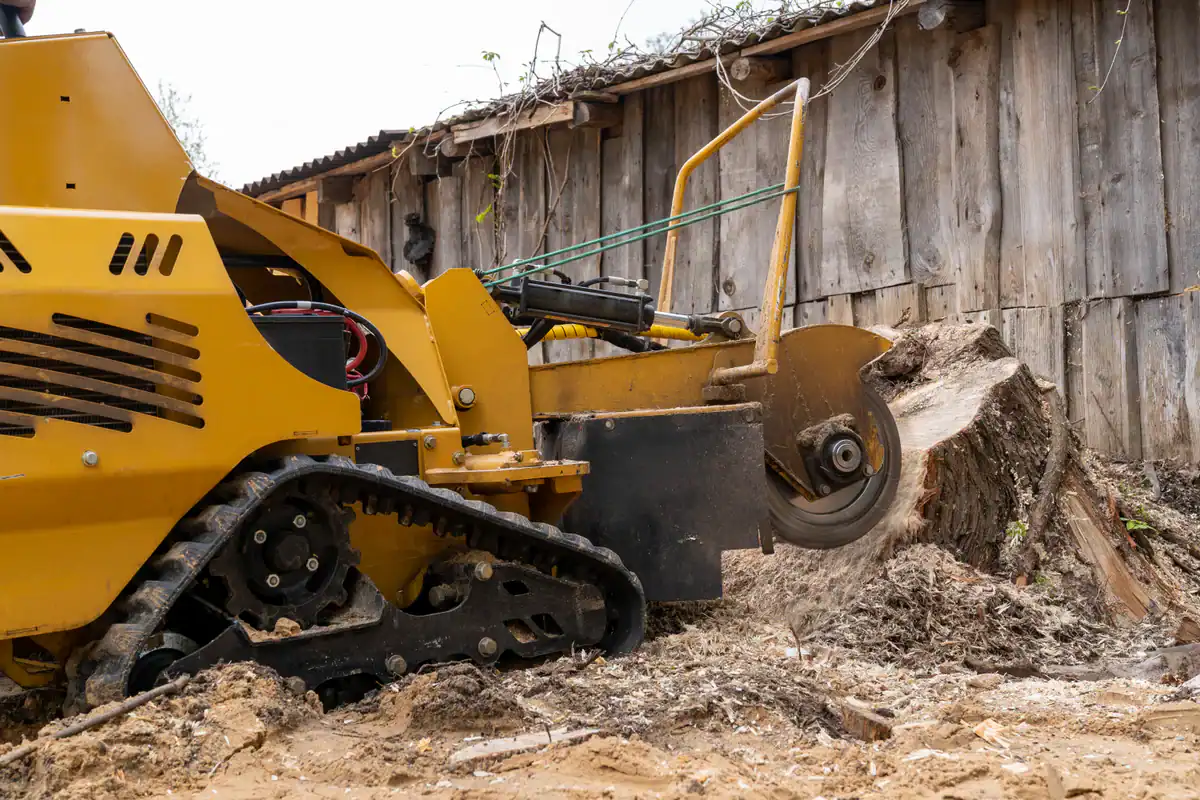
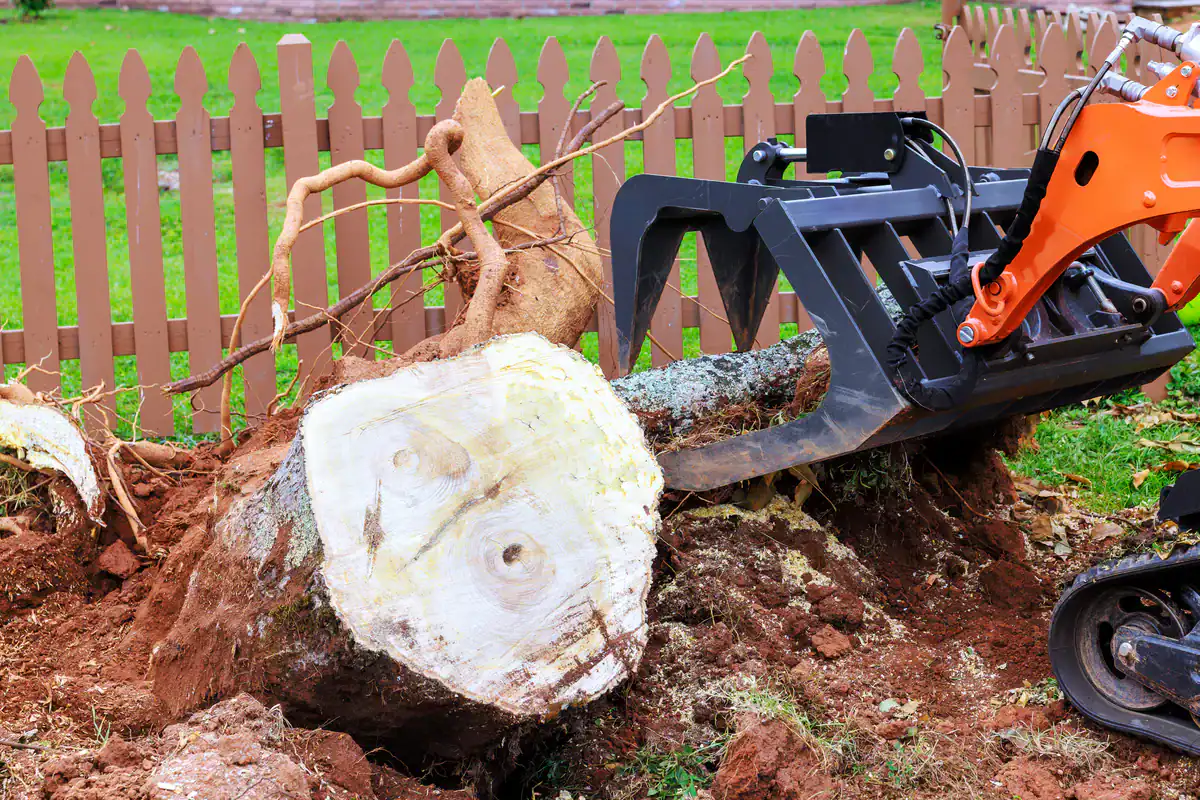
On the day of the job, we handle everything — cutting, sectioning, and removal of the tree down to the stump. If you want stump grinding to finish the job completely, that’s available too. One thing worth knowing for Buckner specifically: there’s no city permit required for removing a tree on private residential property, so there’s no waiting on paperwork before work can begin. When we leave, the yard is clean. No wood piles, no chip piles, no debris. If you want to keep the wood or mulch for personal use, just say so in advance and we’ll accommodate that.
Ready to get started?
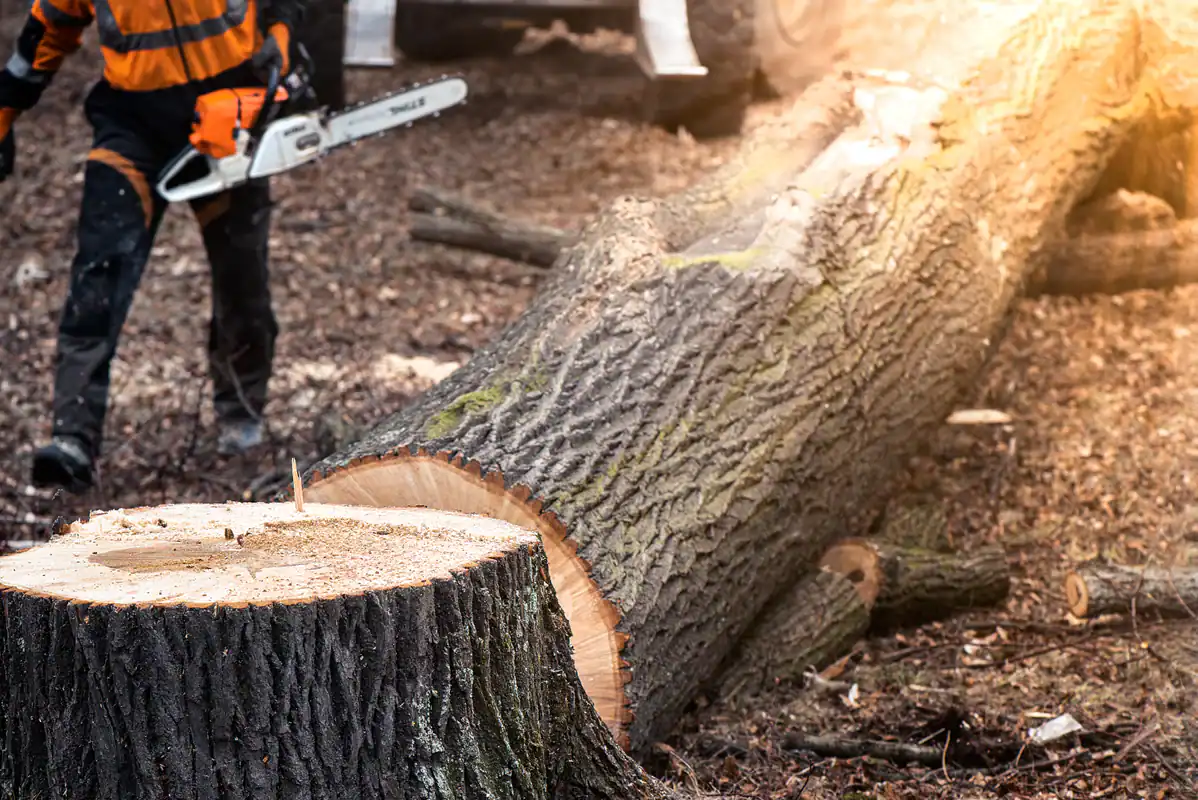
Tree removal in Buckner isn’t just about cutting something down. The older the tree, the more involved the job — and most of the trees on residential lots here have had 50 or more years to grow. Large tree removal requires planning, the right equipment, and a crew that knows how to work safely in tight spaces near homes, fences, and neighboring properties.
We handle the full scope: tree removal, trimming and pruning, stump grinding, brush removal, and emergency storm response. For Buckner homeowners dealing with Emerald Ash Borer damage — a real and active problem throughout Jackson County — dead ash tree removal is something we’ve handled repeatedly in neighborhoods just like yours. Dead ash trees don’t only fall in storms. They drop branches on calm days, and the structural failure can happen without much warning once the tree is far enough gone.
Every job includes full cleanup. That’s not a bonus — it’s standard. In a close-knit community like Buckner, where lots are modest in size and neighbors are nearby, leaving a yard full of debris isn’t acceptable. The job isn’t done until the property looks right. And if you’re not sure whether your tree needs full removal or just a trim, the free estimate will tell you exactly that — no obligation, no sales pitch.
For most residential property owners in Buckner, no permit is required to remove a tree on your own land. Missouri has no statewide tree removal permit requirement, and the City of Buckner’s municipal code does not impose one for standard private property tree removal. That means there’s no waiting on paperwork or city approval before work can begin — once you’ve scheduled the job with us, it can move forward right away.
The one area where this can get more complicated is if the tree is near a public right-of-way, like along US Route 24 or a county road. Trees that overhang or are adjacent to public roads may involve coordination with the city or Jackson County depending on where the root system and canopy fall. If you’re unsure whether your situation involves any right-of-way considerations, a quick on-site assessment will clarify that before any work starts. It’s worth asking upfront rather than finding out mid-job.
This is one of the most common questions, and the honest answer is: it depends on the tree and what’s actually going on with it. Not every tree that looks rough needs to come down. If less than about 25% of the tree’s branches are damaged or dead, there’s a reasonable chance it can recover with proper pruning. A tree that’s leaning slightly, has a few dead limbs, or looks thin on one side isn’t automatically a removal candidate.
What does point toward removal is a combination of factors — a large percentage of dead wood, visible decay at the base or in major limbs, root damage or heaving soil around the base, or a history of dropping large branches. In Buckner specifically, a lot of the older ash trees in neighborhoods built in the 1960s and 1970s are in advanced decline from Emerald Ash Borer damage, and at a certain point, trimming a dead tree isn’t a real solution. The free on-site estimate is the right starting point — you’ll get a straight answer about what the tree actually needs, not a default recommendation for the most expensive option.
This is where a lot of homeowners get caught off guard. Homeowners insurance will often cover damage caused by a tree falling on a structure — but that coverage isn’t guaranteed if the insurer determines the tree was visibly dead or diseased and you didn’t take action. Missouri insurance carriers can and do invoke negligence clauses in these situations, meaning if you knew the tree was a problem and left it, the claim may be denied or reduced significantly.
The neighbor liability angle is also worth understanding. If a dead tree on your property falls onto your neighbor’s fence, car, or structure, and it can be shown that you were aware the tree was dead or hazardous, the financial responsibility can shift to you personally. In a small community like Buckner where properties are close together and neighbors are nearby, that’s a real scenario — not a theoretical one. Removing a known hazard before it falls is almost always less expensive than dealing with the aftermath, both financially and in terms of the relationship with the people living next door.
For most residential jobs, the timeline is more manageable than people expect. A smaller tree — say, under 30 feet — typically takes two to four hours from start to cleanup. A larger tree, which is common on Buckner’s older lots where 50-year-old specimens have had decades to grow, can take a full day depending on the size, location, and proximity to structures or fencing.
What affects the timeline most is the complexity of the removal — not just the size of the tree, but how close it is to your home, a neighboring property, or the road. Removing a large tree safely in a tight residential yard takes more time than dropping one in an open field, and rushing that kind of work is how property gets damaged. We’ll give you a realistic timeframe during the estimate so you can plan accordingly. Most jobs are completed in a single visit, and the property is left clean before we leave — so your day isn’t extended by cleanup that you’re left to handle yourself.
It can be, and it’s worth understanding why. Buckner sits in the Missouri River valley, which means the area has heavier clay soil composition than you’d find in flatter parts of the KC metro. Clay soil compacts, drains poorly, and can shift — all of which affect how tree roots anchor into the ground. A large tree in clay-heavy soil may have a root system that’s wider and shallower than expected, which affects both the stability of the tree and the complexity of stump removal after the tree is down.
The valley terrain also means some Buckner properties sit on slopes or in low-lying areas near the river bottom. Trees on slopes are subject to soil movement that can accelerate structural instability over time, and trees in low-lying areas near the river can experience periodic root stress from flooding that weakens them gradually. None of this makes removal impossible — it just means we need to assess the site before starting rather than treating every job as identical. That’s part of what the on-site estimate covers, and it’s why experience with this specific part of Jackson County matters.
The most important thing to confirm before anyone starts work on your property is proof of insurance — specifically general liability coverage and workers’ compensation. In Missouri, there’s no required state license for basic tree work, which means anyone with a truck and a chainsaw can legally call themselves a tree service. That makes insurance the primary thing separating a legitimate operation from one that leaves you exposed.
Ask to see the actual certificate of insurance, not just a verbal confirmation. Workers’ comp matters specifically because if a crew member is injured on your property and the company doesn’t carry it, that liability can fall on you as the homeowner. Beyond insurance, ask how long the company has been operating in this area, whether cleanup is included in the quoted price, and whether the estimate is truly free with no obligation. A company that’s been working in the Kansas City, KS & MO metro for over a decade, carries full coverage, and gives you a straight answer on all of those questions before any work starts is the kind of operation worth trusting with a large tree on your Buckner property.
Other Services we provide in Buckner