When a storm drops a tree on your roof or blocks your driveway in Kansas City, KS & MO, you don't need a sales pitch — you need someone who shows up fast, does the job right, and doesn't take advantage of the situation. That's exactly what we do.
Every emergency job is backed by an ISA Certified Arborist with 15-plus years of hands-on experience — not a dispatched crew you've never met.
Over 1,200 trees removed across the Kansas City, KS & MO metro with a 100% safety record — a specific claim, not just a slogan.
When a tree comes down, you can't wait until next week. We offer same-day visits for emergency situations across the Kansas City, KS & MO metro.
Independently recognized as a top-1% American business in Kansas City, KS & MO with a 95-plus percent quality score — verified by a third party, not self-reported.
Kansas City, KS & MO Storms Don't Wait — Neither Should You
Kansas City, KS & MO sits right at the edge of Tornado Alley. From March through May, severe thunderstorms and tornadoes push through the metro with winds that regularly top 60 to 70 miles per hour. Summer brings more of the same. Come fall, ice storms load up the big oaks and maples in older neighborhoods like Brookside and Waldo until limbs — or whole trees — give way without warning. When that happens, the damage doesn't stop at the tree. A limb through a roof means water intrusion. A tree across a driveway means you're stuck. A trunk leaning toward a fence line or power line means the situation is still developing. The longer it sits, the worse it gets. We respond to emergency tree calls across Kansas City, KS & MO, Overland Park, Olathe, Lenexa, Leawood, and Mission — on both the Kansas and Missouri sides of the metro. Our estimates are free, same-day when possible, and there are no hidden fees. You'll know what the job costs before we pick up a single tool.

You get a real assessment from a certified arborist — not a guess from a crew that showed up after the storm.
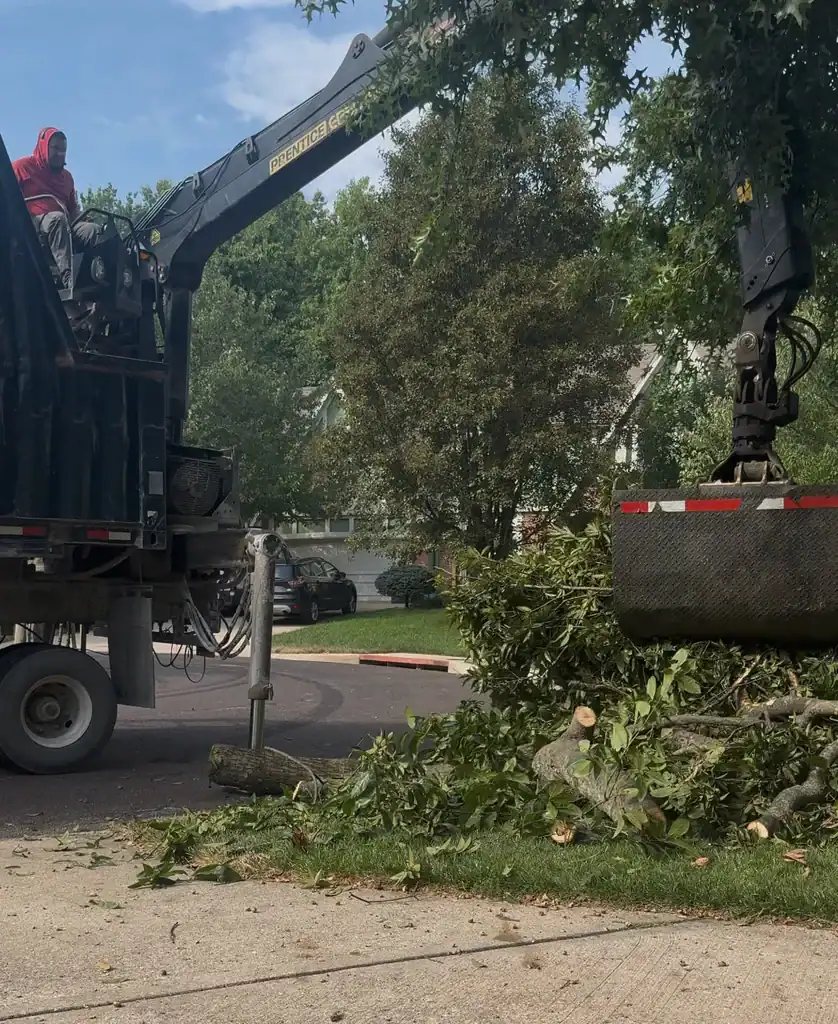
Your driveway, yard, and property are fully cleaned up before we leave — no debris piles, no leftover wood, no mess.
You'll have documentation support if you need to file a homeowner's insurance claim for storm-related tree damage.
You're dealing with a local company that has operated in this community for over a decade — not an out-of-town crew chasing storm work.
We serve both the Kansas and Missouri sides of the metro, so wherever you are in the Kansas City, KS & MO area, we can get to you.
If your household speaks Spanish, we can help — we offer fully bilingual service in English and Spanish.
The Storm Chaser Problem Is Real in Kansas City, KS & MO
After a significant storm rolls through the Kansas City, KS & MO metro, out-of-town crews appear almost overnight. They knock on doors, pressure homeowners into signing contracts on the spot, charge emergency premiums well above what the job warrants, and in some cases take a deposit and disappear. It's a documented pattern, and it happens here. We've been working in Kansas City, KS & MO neighborhoods for over ten years. Our crew lives here. When the job is done, we're still your neighbors — which is exactly why we give you a straight quote, explain what needs to happen and why, and let you decide. No pressure, no runaround. Emergency tree removal does cost more than a standard job — that's true industry-wide, and we won't pretend otherwise. But "more" doesn't have to mean unfair. Our estimates are always free, always same-day when possible, and the price we quote is the price you pay.
What Our Emergency Response Actually Covers
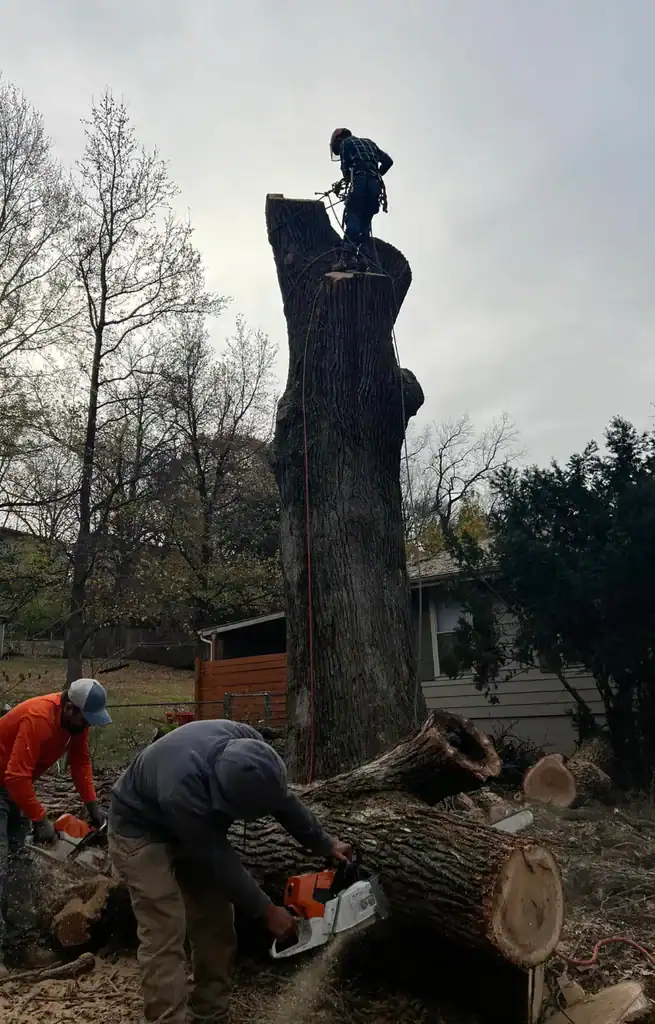
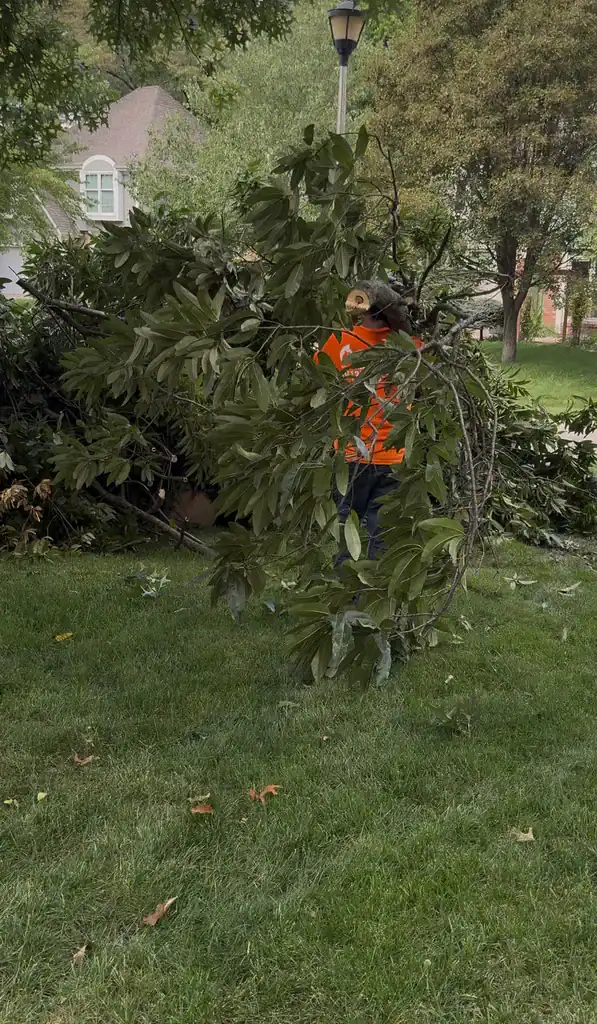
Not every tree emergency looks the same. A full tree through a garage roof is an obvious call. But a large limb cracked halfway through and hanging over your car, a trunk that shifted during last night's storm and is now leaning toward your house, or a root system that heaved up and left a tree at a dangerous angle — those are emergencies too, even if the tree is still technically standing. We handle fallen tree removal, storm damage cleanup, hazardous limb extraction, debris clearing from driveways and structures, and situations where a tree's position near a power line or roofline requires careful rigging before anything can move. Every job includes a full cleanup. We also carry complete liability insurance and workers' compensation coverage, which protects you — not just us — if anything unexpected happens on your property. If you're not sure whether what you're looking at qualifies as an emergency, call us anyway. We'd rather you ask and find out it can wait than wait and find out it couldn't.
A tree emergency is any situation where a tree or large limb poses an immediate or rapidly developing risk to people, structures, or access. That includes a tree that has fallen on or into a structure, a limb that has partially broken and is hanging over a vehicle or roofline, a tree leaning toward a house after a storm, or a trunk blocking a driveway or road. In Kansas City, KS & MO, we see this frequently after spring tornadoes and winter ice storms that bring down large hardwood limbs onto roofs and fences. Situations near power lines require immediate attention and should never be approached without professional equipment. If you're uncertain, call us. A quick description of what you're seeing is usually enough for us to tell you how urgent it is.
In most cases, yes — if the damage was caused by a covered peril like wind, lightning, or ice, your homeowner's insurance policy will typically cover tree removal and any resulting structural repairs. Kansas City, KS & MO homeowners deal with exactly these kinds of events regularly, from spring tornado damage to winter ice storms. Every policy is different, so we recommend calling your insurance company at the same time you call us. We can provide documentation of the damage and the work performed, which your adjuster will likely need as part of the claims process.
For genuine emergencies, same-day response is available. We serve Kansas City, KS & MO, Overland Park, Olathe, Lenexa, Leawood, and Mission — covering both the Kansas and Missouri sides of the metro — so we're not driving in from out of the area. For non-emergency situations, we typically respond within 24 hours. When you call, we'll give you a realistic window based on current demand and your location. We won't tell you we're coming in an hour and then show up the next day. If we can get there same-day, we'll tell you that. If we can't, we'll tell you that too.
Yes — significantly more dangerous than a standard tree removal. Storm-damaged trees are structurally unpredictable. A trunk that looks stable may have compromised roots. A limb that appears lodged may shift suddenly when disturbed. Trees in contact with power lines carry electrocution risk even when lines appear undamaged. Chainsaw-related accidents send tens of thousands of people to emergency rooms every year, and a large portion of those involve people attempting to deal with fallen or damaged trees after storms. The combination of an unstable tree, a chainsaw, and proximity to a structure or utility line is genuinely high-risk. It's not worth it. Call a professional.
We handle trees near power lines, but the approach depends on the specific situation. If a tree has made contact with an active line, the first call should be to your utility provider — KCP&L or Evergy for most Kansas City, KS & MO metro customers — to have the line de-energized before any crew gets near it. Once the line is safe, we can proceed with removal. For trees growing into or overhanging lines that haven't yet made contact, we can assess the risk and handle the removal with proper rigging. We won't rush a job near utility infrastructure. That's exactly the kind of situation where shortcuts cause serious injuries.
Full cleanup is included on every job. When we leave, your property is clear — no debris piles, no wood left stacked against the fence, no branches scattered across the lawn. This includes the tree itself, any limbs, and the smaller material that comes down during removal. The only exception is if you specifically want to keep the firewood, in which case we can discuss leaving cut sections in a designated spot. But the default is a clean property when we're done. A lot of homeowners have been burned by crews that removed the tree and left the mess — that's not how we operate.